

last updated: oct 26, 2026
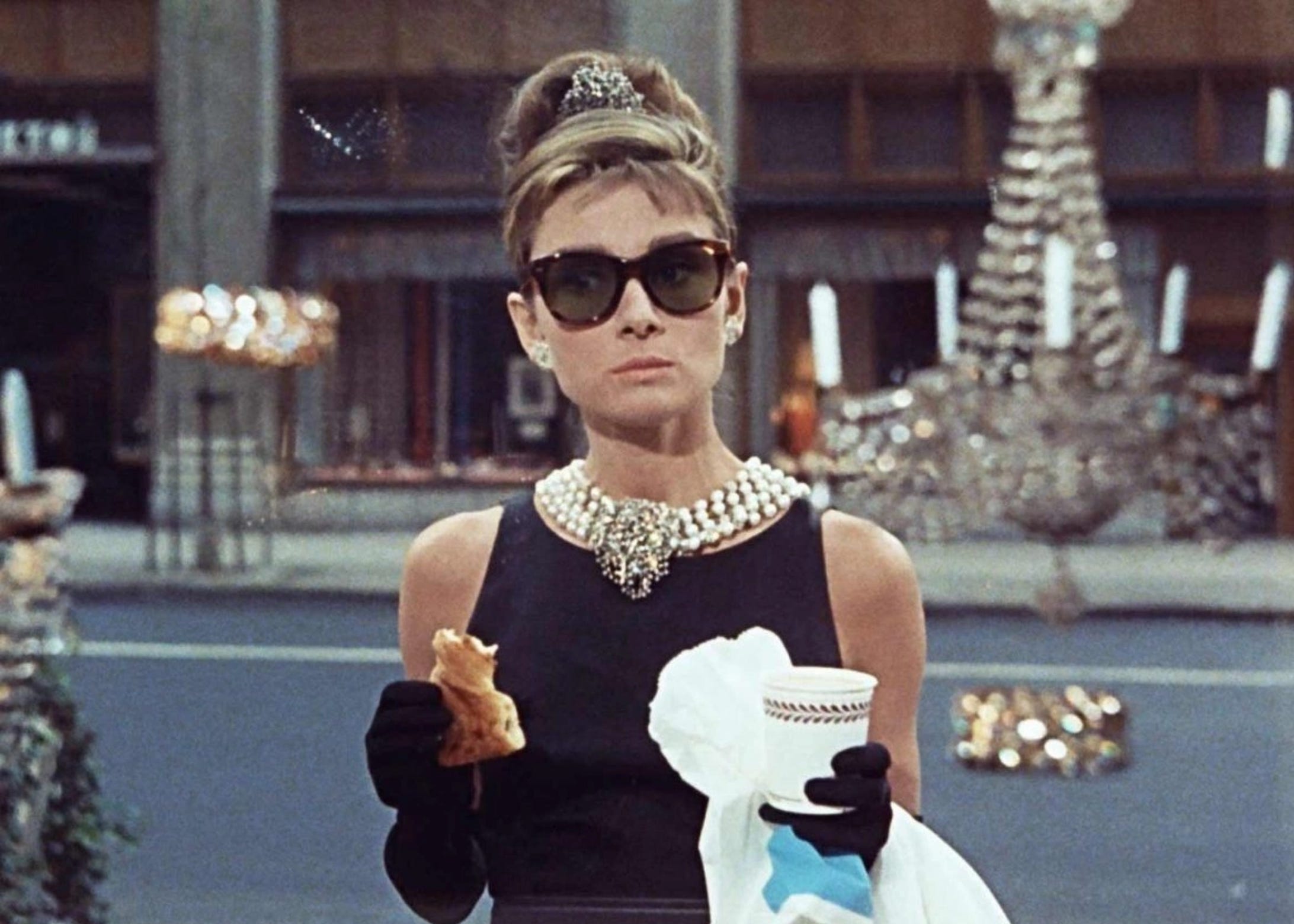
Cairo Salomé wrote an essay this year called “you fuck the way you spend money.”
i clutched my pearls, then checked my order history.
[hard gulp]
her point isn’t how much. it’s how well — how much you can hold, whether you can let something die when it’s done, and whether you can actually receive.
by all three measures, 2022–2024 sarah was a disaster with a credit card.
i couldn’t hold anything. not a paycheck, not a quiet weekend. steady felt like nothing was happening, so i made chaos happen, usually at checkout.
i couldn’t let anything die. not the dress i never wore, not the boots with the tags still on. i’d paid too much to call them mistakes, so they stayed, crowding out the pieces that actually felt like me.
and i couldn’t receive. a compliment, a gift, a man literally begging to love me.1 i boomeranged all of it straight back, gift receipt attached.
quick, before you read more: hold, let die, or receive? which one’s yours?
i spent years in market research studying exactly why women behave this way. i could have written the case study. instead, i became it.
i was eating all the time and never once fed.
the palate cleanser
then life cut me off.
by july 2025 i was mostly in bed: chronic migraines, 30 lbs lighter, hair falling out, skin i didn’t recognize. every tool i’d ever reached for was gone: the money, the energy, the version of me i’d been paying to keep alive.
i moved from utah back home to kentucky, into my grandmother’s basement. the first morning there, i didn’t decide to get dressed. i was moved to.
before i’d had a single thought, my hands were in the closet, reaching past everything practical for a vintage heel and a silk skirt — pieces that had been waiting in the dark for over a year. with nowhere to go but upstairs.
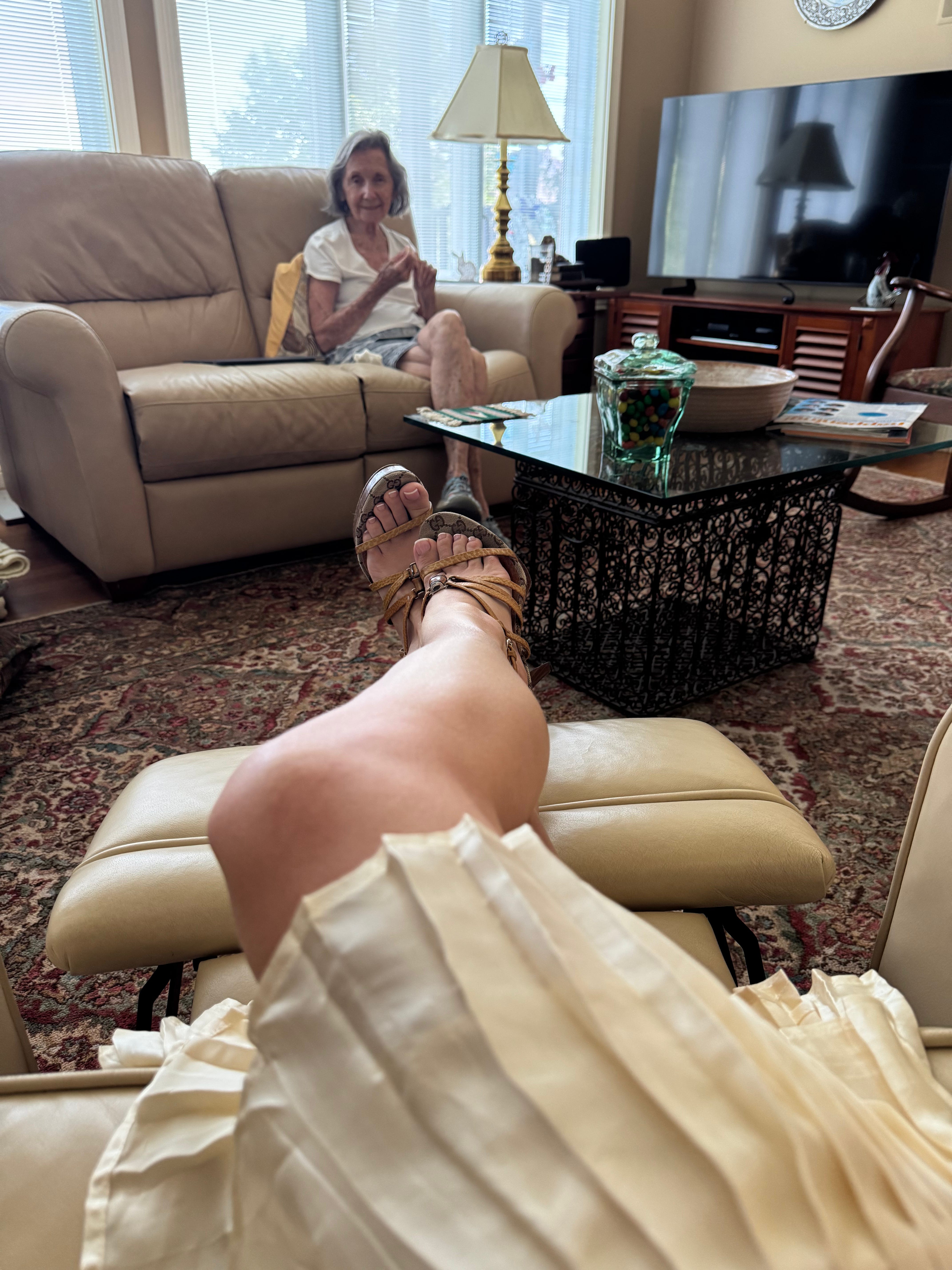
looking back, i don’t know why i felt this pull toward housebound glamour. but if god is the source of all creation, it tracks that the message would arrive as divine thrift-ervention.
you can’t slouch in a 4-inch heel. my body stood up before the rest of me did.
and while nobody writes a prescription for an outfit, it worked. i took another dose the next morning, and the next, until the woman in the mirror started showing up on her own.
it sounds dramatic to say that split-second decision healed me. i am a dramatic woman. i also mean every word — that basement is where overdressed was born.
all those carts, all those confirmation emails, and it took living in a basement for me to receive from a single thing i owned.
back on solids
this is a lovely sentiment right up until you allow yourself to shop again.
i spent almost a year not buying clothes for myself (here’s what that taught me) — and when the fast ended, muscle memory took over. i opened the apps, went straight to my old favorites and filled the cart(s).
and then i felt f*cking nothing. not guilt, not excitement. it wasn’t the clothes i’d outgrown. it was the reflex.
that’s when it clicked: buying and receiving are totally different muscles, and i’d spent years training the wrong one. buying lives in the wanting: the search, the cart, the tracking number. receiving lives in the having: the fourth wear, the way it softens, the years it spends becoming yours.
and it’s not just me. the whole machine is built to keep us in the wanting.
an it-brand a scroll, a micro-trend a week, daily drops on mega retailers like r*volve. free returns, so nothing ever has to be kept. hauls where you buy ten things to keep two. we’ve made it possible to own everything and receive nothing.
so i stopped shopping for the wanting and started shopping for the having: fewer brands, chosen slowly, the kind you’re still reaching for in year three. because trend slop fills you up. the right clothes feed you.
a year ago, i started writing them down. it’s 33 brands now, mostly small, and i named it lovingly in my notes app after the woman who needed it:
the overfed index (noun) o·ver·fed in·dex | \ ˌō-vər-ˈfed ˈin-ˌdeks
a running list of brands that actually nourish, filed by what they feed. for anyone who has been overfed and underfed at the same time.
every brand sits under one of five courses:
energy — gives your attention back.
pleasure — felt more than seen.
expression — the self you’re rehearsing.
confidence — nerve, sewn in.
connection — the hands behind it.
i’ll keep adding to this index as i find more brands and founders worth wearing.
below is a free tasting: three brands, three courses, three prices. the full menu is for paid subscribers.
price key: $ under $200 · $$ 200–500 · $$$ above $500, for each brand’s signature piece.
the tasting:
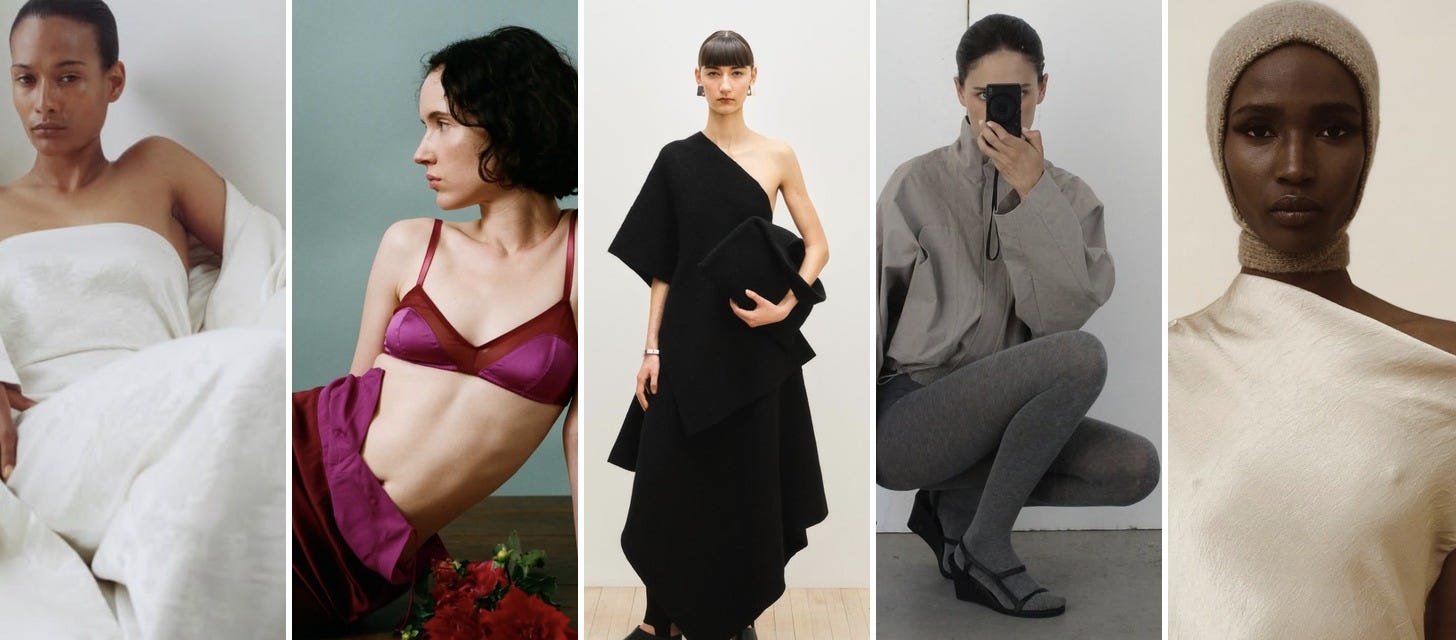
st. agni · byron bay · $$ · feeds energy
dramatic and simple at once, and good at everything they touch. a rep in their new york showroom called it “poetic pragmatism,” and i haven’t found a better description since: completely wearable, never once ordinary.
lauren manoogian · new york · $$$ · feeds connection
hand-knit and hand-loomed in peru by makers she’s worked with for over a decade. i tried on a few pieces while shooting an editorial, and every single one did the same thing: ridiculously classy, and one of the sexiest things i’d worn all year.
araks · new york · $ · feeds pleasure
lingerie as a color study, not a seduction tool: sexy for you, no audience required. when i was dreaming up a lingerie brand of my own, araks was the one already doing it right. (more on that next week.)
the cure for underfed isn’t less. it’s the right kind of more. that’s what overfed means here.
the full overfed index is for members: the brands i think are actually worth your money right now, filed by what they feed. it changes as i do.